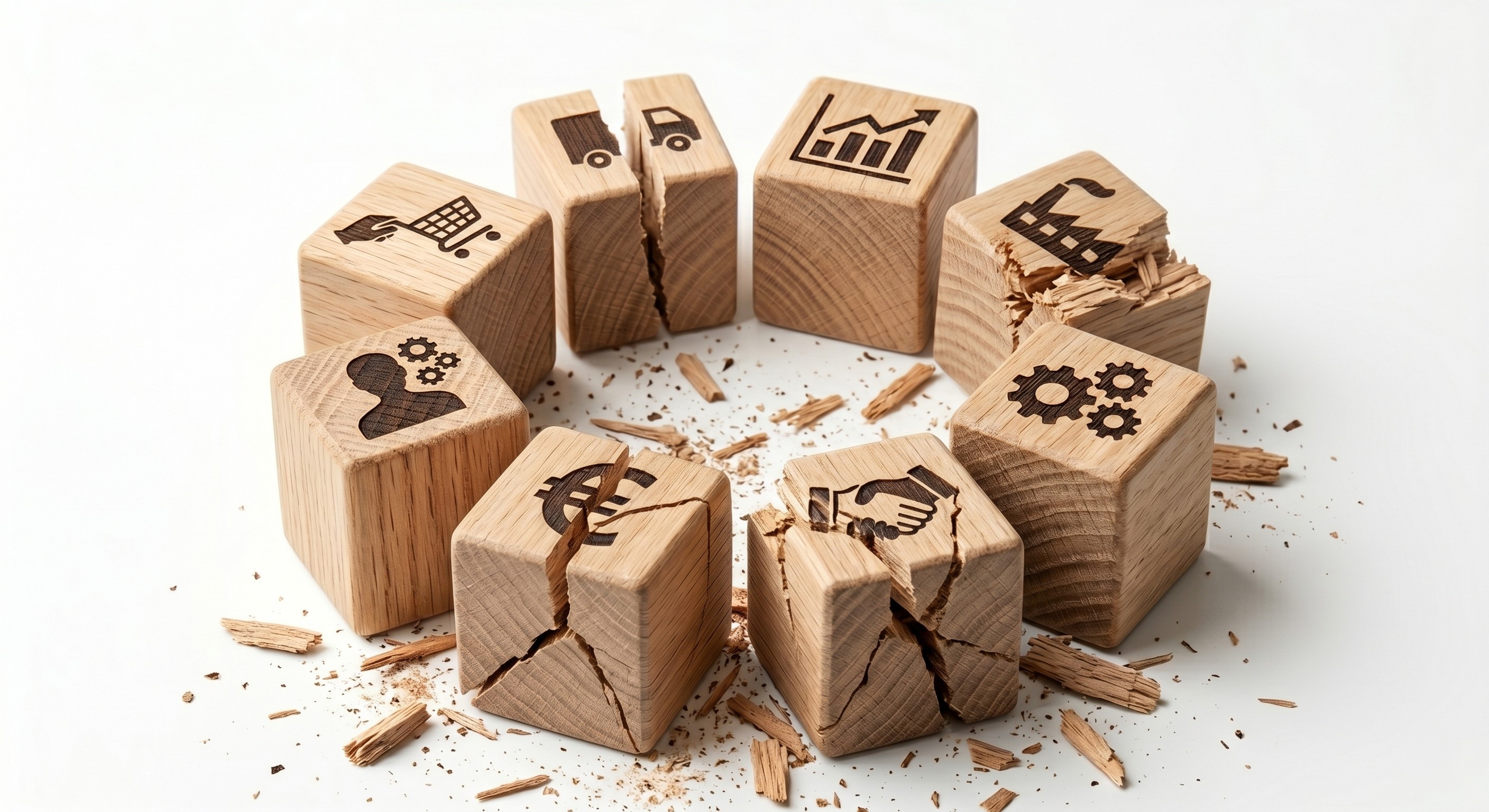
Enterprise Resource Planning (ERP) systems are impressive. Whether it is a single platform or a collection of apps, they can handle almost anything—from supply chain planning and finance to HR and operations. But if you ask the people who actually use them, they often say that while it works, it is not very pleasant to use. And that is where a company starts losing value. Anyone who has ever worked with ERP applications knows the drill: endless screens, complex workflows, and a logic that seems to serve the system rather than the user. When software is hard to use, efficiency drops. In fact, research firm Gartner points to a lack of user adoption as one of the biggest risks for ERP implementation projects failing.
So, what actually happens?
ERP systems are the backbone of any organization. But historically, they have been designed around processes, data, and technical control—not human intuition and understanding.
This often doesn't match how people actually want to work. So, they find workarounds. 'Shadow systems' pop up alongside the official software, and people start relying on Excel sheets. Training is intensive but rarely sticks. In the end, the system is "used," but never truly embraced.
With many mission-critical applications, we see a real lack of efficiency. Not because the software is badly built, but because the user experience is off.
This creates a strange situation: the user has to adapt to the system, rather than the other way around. A finance manager doesn't think in "modules" or "data fields." They think in terms of:
What do I need to finish today?
Where is the risk?
What do I need to approve?
And a planner doesn't think in complex, interconnected screens, but rather:
What is the impact if a schedule shifts?
Where are the bottlenecks in the chain?
Without good Enterprise UX design to tailour the system to a smooth workflow, friction is inevitable. And that friction hurts speed, productivity, and overall efficiency.
How Enterprise UX creates opportunities
Enterprise UX design isn't just about "making screens look pretty." It's about translating complexity into simple, intuitive workflows. That sounds easy, but it isn't. ERP systems are naturally complex because of the massive amounts of data and business rules they handle.
The trick isn't to hide that complexity, but to translate it into something that actually works for the user.
When the user experience is right, something great happens: opportunities open up. System adoption becomes easier. You need less training, face fewer support questions, and meet less resistance. The application simply becomes more efficient.
This has a direct impact on your business. It saves time and money. People are more productive, make fewer mistakes in critical processes, and onboard new colleagues faster. Plus, the need for shadow systems like Excel or other ad-hoc tools disappears.
At Okapion, we often see organizations surprised by how big this impact really is. Enterprise UX quickly becomes a catalyst for the entire ERP implementation.
How to get the most UX value out of your ERP project
When building or updating an ERP landscape, we always recommend these top three tips for integrating UX:
Involve UX early in the process
Don't wait until all functional specifications are set in stone. If you do, you miss out on crucial UX insights and increase the risk of having to rebuild things later.Focus on workflows instead of features
Avoid thinking solely in terms of screens and modules. An overload of features is not the same as a user-friendly application. Focus on end-to-end user scenarios and real workflows.Use real input from real users
Don't make decisions based purely on assumptions or the views of internal stakeholders. Look at real-world behavior instead. Make sure the workflows you build match daily reality. Setting up a user feedback group during the process is a great way to gather quick input and validation.
By taking this approach, you avoid delays in user adoption and prevent costly rework. Working with UX in an iterative way, from strategy to launch, is key.
The future of ERP is experience-driven
What role will UX play in the future of ERP? Technologically, we are at a turning point. Enterprise software is becoming exponentially more powerful, driven by AI and advanced automation.
With AI, an ERP system can do far more than ever before. It speeds up development, handles massive amounts of data with ease, and offers users brand-new ways to interact. However, it remains vital that users still understand what the system is doing, why it's doing it, and how they should work with it.
Gartner predicted that by 2026, 40% of enterprise applications will include task-specific AI agents. But as systems grow more complex, keeping the user experience simple becomes an even bigger challenge.
With good design, you can ensure your ERP system doesn't become a "black box" for your team. Keep the focus on the people using it, both during development and long after.
Ready to unlock your system's potential?
Are you working on an ERP application that is critical to your organization? Our team is here to help you make sure you don't miss out on opportunities to work smarter and faster.
Because in the end, it's not just about how powerful your ERP is.
It comes down to one simple question: Can your people actually work with it?
