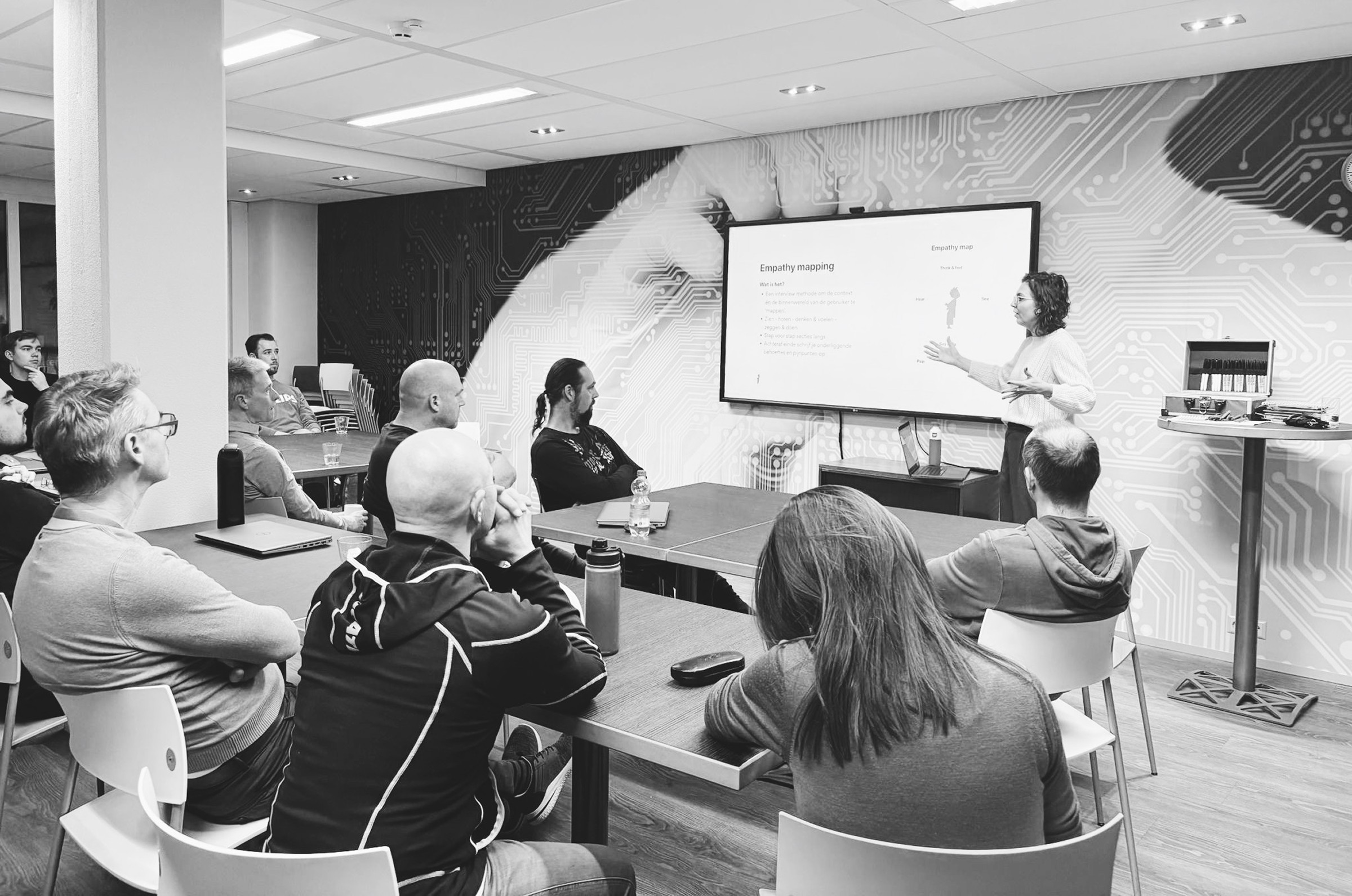
Many software projects start with a clear solution. But what happens when you first go back to basics and truly understand the problem? During a design thinking workshop at ICT TriOpSys, we saw how much of a difference a fresh perspective on the problem can make, especially for development teams.
Good projects don't start with a solution
Many software projects start with a clear demand. A client wants a new feature, a dashboard, or an expansion of an existing system. Development begins, the first demo follows, and then the real questions emerge. Why does no one use this feature? Why does the process turn out differently? Why does the scope change again?
Not because the technology is wrong. But because it was built on an incomplete understanding of the problem.
That's exactly why we often get involved at an early stage. With design thinking, we help organizations to first clarify what problem they are actually solving before time and budget go into development.
What we mean by design thinking
Design thinking is essentially a way of working that helps to build better solutions by first understanding the problem better. By talking to users, exploring their context, and testing assumptions, a clearer picture emerges of what is truly needed.
Not more research for the sake of research, but to make better decisions.
That is exactly what enables design and development to work faster and with more direction later on.
The moment perspectives change
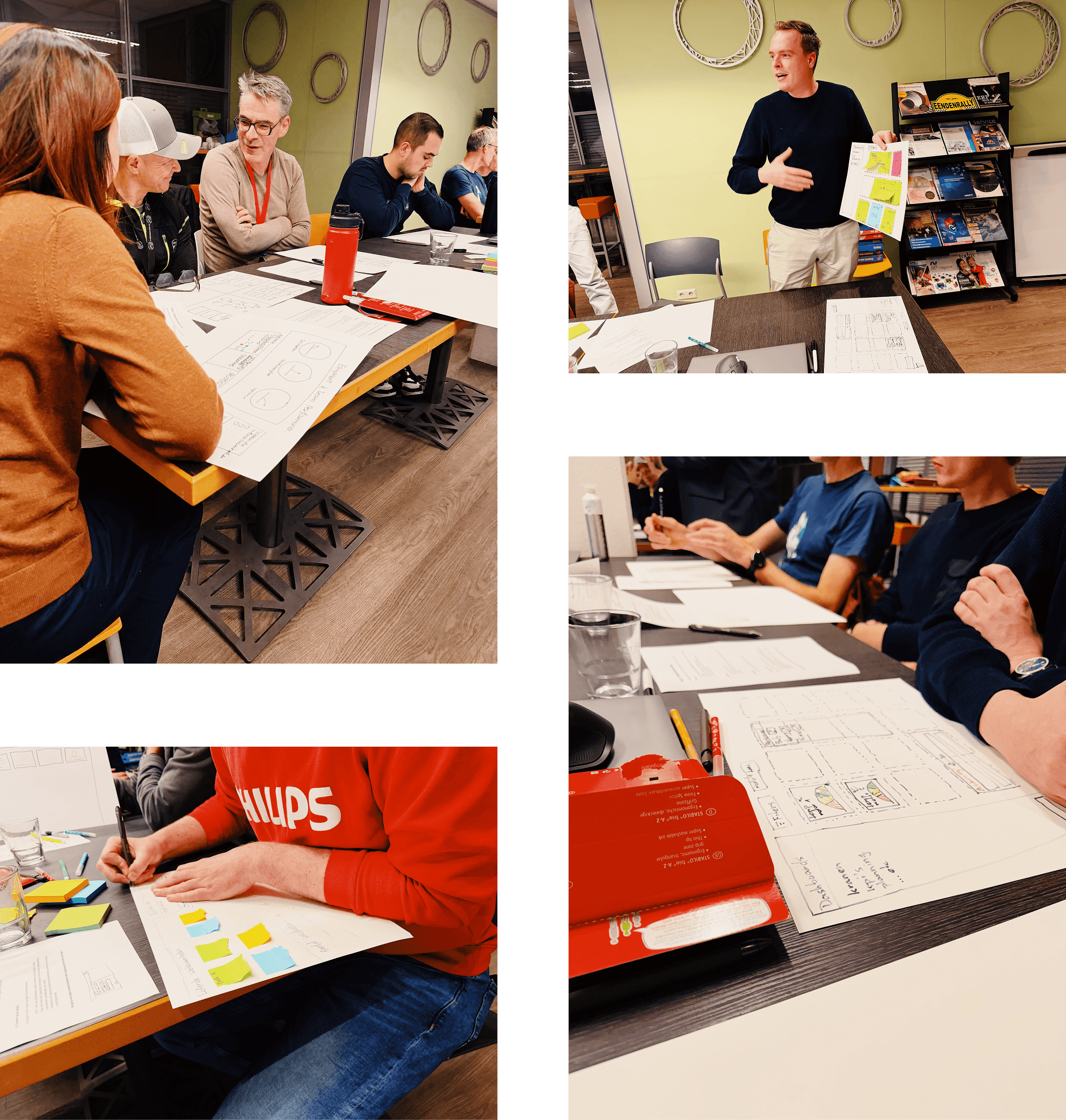
To make this tangible, we organized a workshop at TriOpSys. In a short time, developers experienced the difference between designing based on assumptions and designing with real user insights.
What changed was not just the solution, but especially the conversation. Different questions. Different priorities. More shared focus.
We now understand that design thinking not only delivers better software but often also more enjoyable projects. Less noise, less rework. Better collaboration, also with the client.
Why this supports development
Design thinking is sometimes seen as something for designers. In practice, we see that it actually helps development teams to do their work better. When the problem is clearer, requirements become clearer. When users are better understood, fewer assumptions are made. When the context is clear, better technical choices are made.
But perhaps more importantly: teams align earlier.
When everyone has the same understanding of the problem, there are fewer interpretation differences between business, design, and development. This leads to better collaboration, less miscommunication, and fewer correction rounds later in the project.
Investing in understanding the problem well does not slow down development; it actually allows you to build faster and with more confidence later.
Many project problems are actually communication issues
Many project frictions do not arise because people are not doing their work well. But because teams work from different assumptions.
Design thinking helps to make those assumptions visible sooner. So that teams not only build better but work together better.
Good software starts with understanding
The workshop at ICT TriOpSys shows exactly what energizes us: letting teams experience how better problem understanding leads to better collaboration and better projects.
Not because we expect development teams to become designers themselves. But because understanding this way of working strengthens collaboration. When development, design, and business start from the same insight, a better project simply develops.
That's why we also provide these workshops to other organizations that want to discover how to start projects stronger, how to collaborate better between disciplines, or simply want to experience what design thinking means in practice.
Would you also like to experience what design thinking can mean for your team? We offer this workshop free of charge to organizations that want to explore this.
