With micro-interactions, you make your application more powerful and distinctive compared to the competition. For over 15 years, Okapion has been designing enterprise applications (DIA award-winning) for global brands. We’ll show you how micro-interactions contribute to that.
A World of Difference
Below, you'll see two different implementations of the same functionality: Google Maps navigation.

The textual navigation provides a list of written steps. You need to read each step to understand what to do. Since you don't know exactly how far 300 meters is, you look for street name signs for confirmation. You might even try visualizing the route in your mind. This takes a lot of time and energy, and creates uncertainty.
The visual navigation shows a map with your location and a line indicating the direction you should go. When you need to change direction, an arrow appears showing you which way to go. The map rotates with you, and the compass always points north. You don't need to read to understand what to do. It's all clear at a glance.
Functionally, the same thing is offered: navigation to help the user get from location A to location B. But in terms of user experience, there's a world of difference. This is the power of micro-interactions.
Leading with Micro-interactions
Micro-interactions seem small, but they are perhaps the most important part of your application. Nowadays, there are dozens of product solutions for every problem. And all those products are your competition.
In a new market, you can set yourself apart from the competition by offering more features. But in a saturated market, competitors achieve feature parity: everyone offers the same thing. How then can you distinguish yourself from the rest? With well-designed micro-interactions.
Micro-interactions are the smallest interactions users have with your application. They are the feel in look-and-feel and have a huge impact. With well-designed micro-interactions, you ensure that users choose your application over the competition. They can even make users proud to work with your application. How does that work?
The Effects of Micro-interactions
What makes micro-interactions so valuable?
Users have more confidence
Well-designed micro-interactions ensure consistency and predictability. The cognitive load on your user is reduced, as they don't have to remember what is or isn't possible. This gives your user more confidence in your application and a better user experience.
Users experience more control
Micro-interactions communicate the system status to users through feedback and feedforward. This makes cause and effect clear. Rules become transparent and mistakes are prevented. If something does go wrong, your application supports the user instead of penalizing them. This gives the user a sense of security and control.
You rise above the competition
Your application needs to be functional, of course, but remember it's a touchpoint for your customers. Let it be an extension of your brand by designing text, fonts, animations, icons, or colors in the same style. Micro-interactions offer the space for this. Bring your application to life, let users experience your brand, and distinguish yourself from the uniform interfaces of the competition.
Users experience enjoyment
Enjoyment lies in small things; an animation, sound, or haptic feedback. They enhance the emotional response, create trust, and can even cause a smile. An application that is a joy to use, and even creates meaningful interactions, sells itself.
Micro-interactions in Enterprise UX
We show you two implementations of the same functionality in an Enterprise UX context: adjusting the arrival time of a truck within a scheduling application. Same goal, very different experience.
In this example, you adjust the arrival time through a form. The form and structure of the interface communicate nothing about the content; it is abstract. You need to read to understand what to do, and unfamiliar terms don't help. The entire interaction requires four clicks, and the result is only visible upon completion. There is no cause-and-effect relationship. Afterward, you have to scan the UI again to confirm you didn't make a mistake.
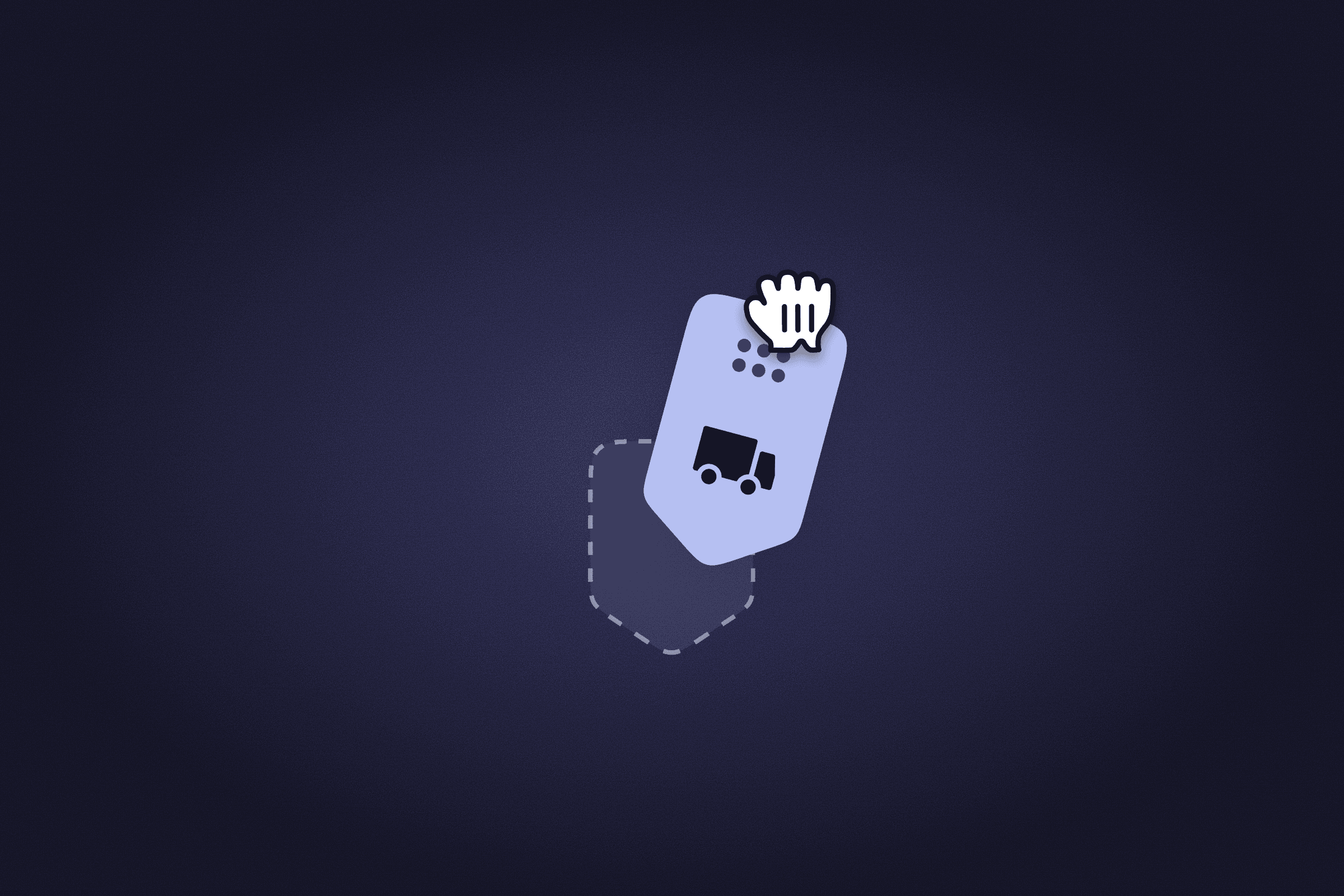
Here, you adjust the arrival time in a way that aligns with the physical world experience of people. The pin offers some resistance when you pull it from the timeline; this prevents mistakes but also enhances the feeling of a "physical" interaction. Cause/effect becomes extra clear when you have the pin in hand; the original place is visible, and the blue bar on the timeline gives real-time insight into the adjustment you make. With one drag, the adjustment is made, and the interaction clearly communicates what happens. You don't need to read or interpret; it is concrete.
Functionally, both examples offer the same thing, but the latter example provides a better user experience. That is due to the principle of direct manipulation.
In the '70s, Xerox PARC scientists discovered that interfaces are more user-friendly when they align with how people perceive and act in the physical world: seeing, touching, grasping. Translated to the digital world, these are actions like drag-and-drop, clicking on icons, and swiping.
With direct manipulation, you remove obstacles. Users can learn your application more easily and forget less quickly. This leads to higher retention. The most important thing? Show, don’t tell.
Does Your Application Stand Out Above the Competition?
In an Enterprise environment, micro-interactions are sometimes forgotten or seen as unnecessary and expensive. But the opposite is true. With the right micro-interactions, you have a more powerful alternative to the classic, form-based interactions. They may seem simpler, but due to their many steps, they often take just as much time to build.
The difference is significant: micro-interactions can determine whether an application becomes a success or ends up in the drawer. Combine them with the principle of direct manipulation, and you have a toolkit that helps create an application that:
offers users certainty and control, lets them experience enjoyment, and turns them into fans
elevates your brand experience to a higher level
stands out above all uniform applications and clearly distinguishes itself from the competition
Are the micro-interactions of your application already being fully utilized? Or can your product offer an even better user experience? We’d be happy to work with you to turn your users into fans too.
